
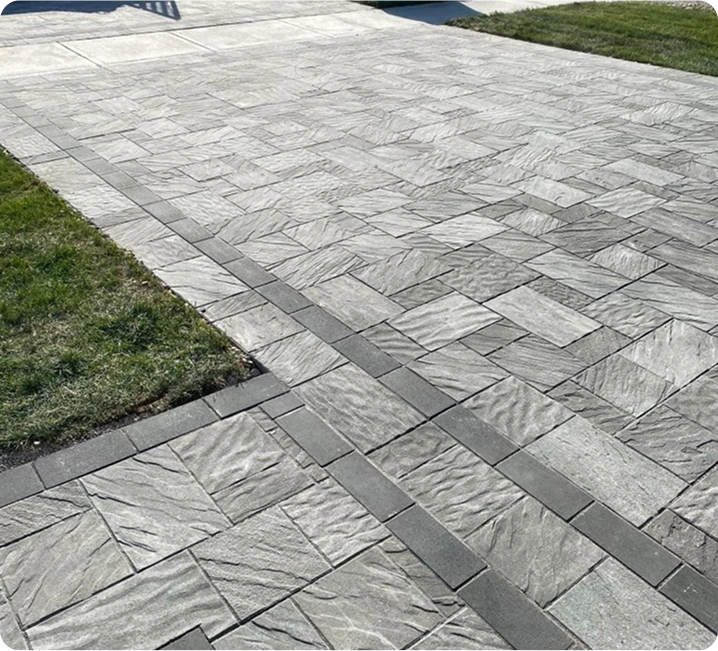
Polymeric sand is one of those things that sounds like a minor detail but has an outsized impact on how well your interlock installation holds up over time. In Ottawa’s climate especially, the difference between regular sand and polymeric sand in your interlock joints is not trivial.
What Is Polymeric Sand?
Polymeric sand is a jointing material made from a blend of sand and polymer binders. When activated with water, the polymers bind together and harden the sand into a firm but slightly flexible joint. Unlike regular sand, it doesn’t wash out easily, resist weed germination, and deters ants and other insects from burrowing into the joints.
It’s used to fill the joints between interlock pavers after installation and after any maintenance work that disturbs the joints.
Why Regular Sand Fails in Ottawa
Standard jointing sand – the kind used in older interlock installations – has two significant problems in Ottawa:
- It washes out. Ottawa gets substantial rainfall and spring snowmelt. Regular sand erodes over time, leaving open joints that destabilize the surface.
- Weeds move in. Once sand erodes, wind-blown soil fills the joints and weeds establish. An interlock installation with eroded, weed-filled joints is both unsightly and increasingly unstable.
Older Ottawa interlock installations that used regular sand often show these problems within 5 – 8 years. Polymeric sand, used correctly, extends that timeline dramatically.
Ottawa-Specific Reasons Polymeric Sand Matters
Freeze-Thaw Resilience
Ottawa’s freeze-thaw cycle is hard on joint sand. Regular sand in open joints allows water to penetrate, freeze, and expand – accelerating joint erosion and contributing to stone movement. Polymeric sand’s bonded structure resists this cycle better, maintaining joint stability through repeated freeze-thaw events.
Ant Control
Ottawa homeowners who’ve had interlock for a few years often notice ant activity in the joints – pavement ants are extremely common in this region. They tunnel through loose sand joints, excavating material that ends up in piles on the surface. Over time, their tunneling destabilizes the base. Polymeric sand significantly reduces ant infiltration because the hardened joints don’t offer the loose material ants prefer to excavate.
Spring Runoff
Ottawa gets significant spring runoff from snowmelt. The volume of water flowing across hardscape surfaces in early spring is the biggest annual erosion event for joint sand. Polymeric sand’s bonded structure resists this washout far better than loose sand.
How Polymeric Sand Is Applied
- Surface must be clean and dry. Power wash the surface and let it dry completely – typically 24 hours minimum.
- Sweep sand into joints. Pour polymeric sand over the surface and sweep it into all joints until full.
- Compact the surface. Plate compact the stones (with a protective pad) to seat the sand deeper into the joints.
- Remove excess sand from the surface. Blow off all sand from the stone surface – any sand left on the surface when water is applied will bond there permanently.
- Activate with water. Mist the surface gently with water – don’t flood it. The water activates the polymer binders. Most products require two misting passes.
- Do not disturb until cured. Typically 24 – 48 hours depending on temperature and the specific product.
Application errors are common in DIY projects. Too much water washes the polymers out of the joints. Sand left on the surface bonds there. The surface needs to be completely dry before application. Done wrong, polymeric sand performance is significantly reduced.
When to Reapply Polymeric Sand
Signs that your joints need fresh polymeric sand:
- Visible joint gaps or depressed joints
- Weed growth emerging from joints
- Ant activity or piles of excavated sand on the surface
- Rocking or unstable stones
- Joint sand washing out in rain
For most Ottawa installations, re-sanding every 3 – 5 years is a reasonable maintenance schedule. High-traffic driveways may need attention more frequently. See our full interlock maintenance guide for the complete seasonal care picture.
Get Your Free Estimate Today
Need interlock installation or maintenance in Ottawa? Contact JAL Deck & Interlock for a free estimate. We serve Ottawa and surrounding areas including Stittsville, Carleton Place, Nepean, Barrhaven, and beyond.