
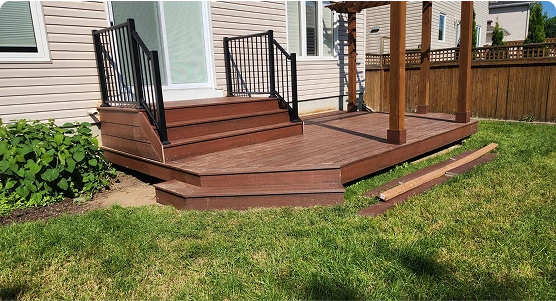
An interlock pool surround is one of the most popular choices for Ottawa homeowners who want a premium outdoor living space. When designed well, it connects the pool to the rest of the backyard as a cohesive environment rather than just a hole in the ground surrounded by concrete. Here’s what to know before you plan your pool deck and surround.
Why Interlock Works Well Around Pools
Drainage
Pool decks get wet – constantly. Interlock’s permeable joints allow water to drain away from the surface rather than pooling. Properly graded interlock channels water away from the pool edge and toward drainage points, keeping the surface safer and extending the life of the installation.
Repairability
Pool areas are subject to more ground movement than most hardscape surfaces. Seasonal water table changes, pool backwash, and the weight of the pool itself affect the surrounding ground. Interlock’s individual stone system means that any settling or shifting can be corrected by lifting and re-levelling stones without tearing out the whole surface.
Design Flexibility
Interlock works with pool shapes – straight, curved, irregular. It can be cut to follow the pool coping exactly, creating a seamless visual transition. Concrete requires forming to irregular shapes, which adds cost and limits design choices.
Slip Resistance: What to Look For
Slip resistance is the most important safety consideration for a pool surround. Not all interlock stone is equally slip-resistant when wet:
- Tumbled finishes – slightly rough, uneven surface texture – provide better wet traction than smooth-faced stone
- Textured or brushed finishes are designed for slip resistance and are ideal for pool applications
- Avoid polished or honed finishes around pool areas – they become extremely slippery when wet
- Ask your contractor and stone supplier specifically about slip resistance ratings – manufacturers publish these for their products
Stone Colour and Heat Retention
Dark stone absorbs and holds heat. Around a pool where barefoot use is constant, a dark charcoal stone can become uncomfortably hot on a sunny Ottawa July afternoon. Consider:
- Lighter stone colours (buff, light grey, cream tones) stay significantly cooler underfoot
- Mid-tones are a reasonable compromise between heat retention and showing staining
- If you love a darker aesthetic, consider using the darker stone as border accents with lighter stone for the main walking surfaces
Design Considerations for Ottawa Pool Surrounds
Coping Integration
Pool coping (the cap stones that sit at the pool edge) can be coordinated with the surround stone or deliberately contrasted. A coordinated look is more seamless; a contrasted coping creates a visual frame around the pool. Both are valid choices – discuss with your contractor and pool builder early to ensure the two finishes complement each other.
Zoning the Space
A well-designed pool surround has zones: a narrow border right at the pool edge for getting in and out, a wider sun deck area for lounging, and a transition to a shaded area or outdoor kitchen. Using pattern or level changes to differentiate these zones makes the space more functional and more visually interesting.
Connecting to the Rest of the Yard
The pool surround shouldn’t be an island. Interlock walkways connecting the pool to the house entrance, a change room, a deck, or a garden area make the whole backyard flow. Using the same or complementary stone throughout the yard creates a cohesive outdoor living environment.
Drainage Design
Pool water overflows constantly – from splashing, from backwash, from rain. Your interlock surround needs to be graded to direct this water away from the pool structure and toward appropriate drainage. This is particularly important given Ottawa’s spring runoff volumes. Your contractor should design drainage into the project from the start.
Maintenance for Pool Surrounds
Pool surrounds see more chemical exposure than any other interlock application. Pool water splash-out and backwash contain chlorine that can gradually bleach stone colour and degrade polymeric sand if not addressed:
- Rinse regularly – a weekly freshwater rinse of the pool surround removes chemical residue before it accumulates
- Seal the surface – sealing creates a barrier against chemical penetration and is more important for pool surrounds than for patios or driveways
- Inspect joints annually – the combination of water exposure and chemical contact breaks down polymeric sand faster around pools than in other applications; plan on re-sanding every 2 – 3 years rather than the standard 3 – 5
For the full seasonal maintenance picture, see our guide on how to maintain interlock in Ottawa.
Get Your Free Estimate Today
Planning an Ottawa pool with an interlock surround? Contact JAL Deck & Interlock for a free estimate. We handle pool surrounds, deck installations, and complete outdoor living spaces. We serve Ottawa and surrounding areas including Stittsville, Carleton Place, Nepean, Barrhaven, and beyond.