
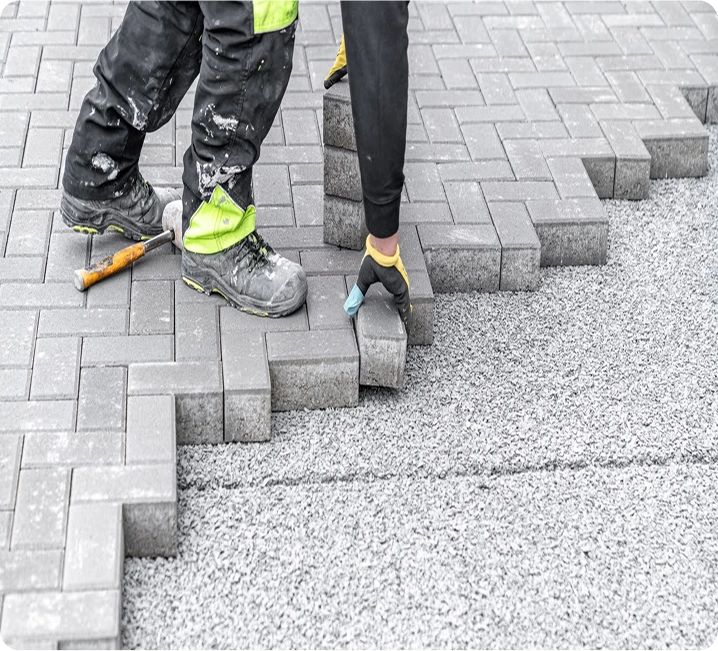
One of the first questions Ottawa homeowners ask when considering interlock is how long it will actually last. The short answer: a properly installed interlock driveway, patio, or walkway can last 25 – 30 years or more. But the operative phrase is “properly installed.” Lifespan varies significantly based on installation quality, base preparation, maintenance, and how well the system handles Ottawa’s specific climate conditions.
This guide breaks down what drives interlock lifespan, what shortens it, and how to protect your investment.
Typical Lifespan of Interlock in Ottawa
Interlock pavers themselves are extremely durable – the stone doesn’t wear out under normal residential use. What “fails” in an interlock installation is typically the base, the jointing sand, or the edge restraints – not the stone itself. This is good news: most interlock problems are correctable without replacing the entire installation.
- Interlock driveways: 25 – 35+ years with proper base preparation and regular maintenance
- Interlock patios: Often longer than driveways due to lighter traffic loads
- Interlock walkways: Similar to patios; very long lifespan when base is correctly prepared
- Retaining walls: Highly variable based on soil conditions and drainage; properly engineered walls can last decades
For comparison: asphalt driveways typically need resurfacing every 15 – 20 years, and concrete driveways often show significant cracking within 10 – 15 years in Ottawa’s climate. A well-built interlock installation outlasts both.
The #1 Factor: Base Preparation
If there’s one thing that determines how long an interlock installation lasts in Ottawa, it’s the quality of the base beneath the stone. Ottawa’s clay-heavy soil and intense freeze-thaw cycles create constant ground movement. A deep, well-compacted granular base drains water away before it freezes and expands beneath the surface.
The industry standard for residential driveways is a minimum 8 – 10 inch compacted granular base. Patios and walkways require slightly less. Contractors who cut corners on base depth are the primary reason interlock installations fail prematurely in Ottawa.
When getting quotes, always ask what base depth is being specified and have it included in writing. A contractor who can’t or won’t specify base depth is a red flag. See our guide on what affects interlock pricing in Ottawa for more on what to look for in a quote.
How Ottawa’s Climate Affects Interlock Lifespan
Ottawa experiences some of the most demanding conditions for hardscape installations in Canada. The combination of heavy snowfall, aggressive freeze-thaw cycling, and clay-based soil makes base preparation more critical here than in most other Canadian cities.
Freeze-Thaw Cycling
Ottawa averages over 100 freeze-thaw cycles per year. Each cycle moves the ground slightly – water expands as it freezes, then contracts as it thaws. Interlock’s flexible system is designed to accommodate this movement. Individual stones can shift slightly without cracking. But if the base drains poorly and water pools beneath the surface, repeated freezing causes progressive heaving that eventually disrupts the surface level.
De-Icing Salt Exposure
Interlock handles salt better than concrete, but it’s not immune. Over time, heavy salt use can damage the surface of lower-quality pavers and degrade polymeric sand in the joints. Using sand as a primary de-icer and minimizing salt use extends the life of both the stone and the jointing material significantly.
Spring Thaw Load
Ottawa’s spring thaw is particularly hard on driveways. When the ground thaws unevenly – often thawing from the top while remaining frozen below – it creates temporary instability. Heavy vehicles on a driveway during the spring thaw period can accelerate settling. This is temporary and correctable, but worth understanding if you notice any movement in spring.
Factors That Shorten Interlock Lifespan
- Shallow base depth: The single biggest cause of premature failure in Ottawa
- Poor drainage: Water pooling beneath or around the installation leads to frost heave
- Missing or inadequate edge restraints: Without proper edging, the installation spreads laterally over time
- Neglected joint sand: As polymeric sand degrades, weeds establish and the surface becomes unstable
- Tree root intrusion: Roots from nearby trees can push up sections from below over time
- Heavy equipment on residential-grade installations: Delivery trucks and construction equipment can damage a driveway designed for passenger vehicles
Maintenance That Extends Lifespan
The good news about interlock is that most maintenance is straightforward and predictable:
Re-Sand the Joints (Every 3 – 5 Years)
Polymeric sand gradually erodes from rain, water pressure, and freeze-thaw action. Topping up the joints with fresh polymeric sand keeps the surface stable, deters weeds, and prevents ant and insect infiltration.
Seal the Surface (Every 3 – 5 Years)
Sealing protects the stone’s colour, slows salt damage, and helps polymeric sand bond better in the joints. It’s not mandatory but significantly extends the visual life of the installation and adds protection against staining.
Re-Level Sections as Needed
If a section settles or heaves, address it promptly. The beauty of interlock is that this is a simple fix: lift the stones, correct the base, re-lay, re-sand. Left unaddressed, an unlevel section can create a trip hazard and allow water to pool, accelerating further damage.
Snow and Ice Management
Use plastic snow shovels or snow blowers rather than metal blades that can chip paver edges. Minimize rock salt – use sand or calcium chloride sparingly. Calcium chloride is less damaging than sodium chloride (rock salt) but still not ideal for long-term use.
Signs Your Interlock Needs Attention
- Visible unevenness or rocking stones
- Weed growth in the joints
- Sand washing out or joint gaps becoming visible
- Stones sinking in one area (drainage issue beneath)
- Edge sections spreading or losing alignment
None of these are end-of-life indicators. All are correctable repairs that, addressed promptly, add years to the overall lifespan of the installation. This is the core advantage of interlock over concrete – problems are fixable.
Frequently Asked Questions
Does interlock need to be replaced, or can it be repaired?
Almost always repaired, not replaced. Individual stones can be lifted, bases corrected, and stones re-laid. If you have leftover stone from the original installation, repairs are invisible. Even if the original stone is discontinued, a skilled contractor can often find a close match or work repairs into a border design.
How do I know if my interlock was installed correctly?
Signs of a quality installation include: uniform surface with no rocking stones, proper drainage away from the house, solid edge restraints, filled joints with polymeric sand, and no visible gaps or spreading along the edges. If your interlock is relatively new and showing problems, the base is usually the culprit.
Is it worth fixing old interlock or starting fresh?
Depends on the scope of the problem. Localized settling or heaving is worth repairing. If the base was improperly installed throughout and the entire surface is unstable, a full reinstall with correct base preparation is the better long-term investment. A professional assessment will tell you which situation you’re in.
Get Your Free Estimate Today
Planning a new interlock installation in Ottawa or need an assessment of an existing one? Contact JAL Deck & Interlock for a free estimate. We serve Ottawa and surrounding areas including Stittsville, Carleton Place, Nepean, Barrhaven, and beyond.